

Rear End Collision | Who is at Fault?
Rear end collisions account for 36% of claims in Queensland’s CTP scheme in the years 2000 to 2010 and up to 25% of all crashes across Australia. While rarely fatal, these accidents often cause whiplash and other soft tissue injuries that can lead to ongoing pain and time off work.

Most rear-end crashes happen because of inattention, tailgating, or sudden braking, with young male drivers statistically more likely to be involved. Drivers are legally required to maintain a 2- or 3-second safe distance.
If you’ve been involved in a rear end collision and need clear advice about who is at fault, WT Compensation Lawyers can guide you through your options and help protect your rights. Contact us for a free case assessment.
Which Driver is At Fault In a Rear End Collision?
If your car crashes into the back of another vehicle, you’re considered at fault because you failed to maintain a safe following distance. The law expects you to leave enough space to stop safely. When you don’t, you breach your duty of care, and that’s why you’re held responsible for the accident.
But you aren’t always at fault. If the vehicle ahead brakes suddenly without reason, merges into your lane recklessly, or has faulty brake lights, their actions may have caused the collision. These situations can shift fault to the lead driver if they created a hazard you couldn’t avoid.
If you believe the vehicle ahead caused the accident, you’ll need evidence that proves it. Dashcam footage, witness statements, or mechanical reports showing their negligence will be necessary. Without this, the insurer will assume you’re at fault because you hit the vehicle ahead.
What Happens If You’re At Fault?
If you’re considered at fault in a rear end collision accident, you will be responsible for paying for the damage to the car ahead, including towing and hire car expenses. If you have an insurer, they will cover these costs, but you’ll need to pay an excess.
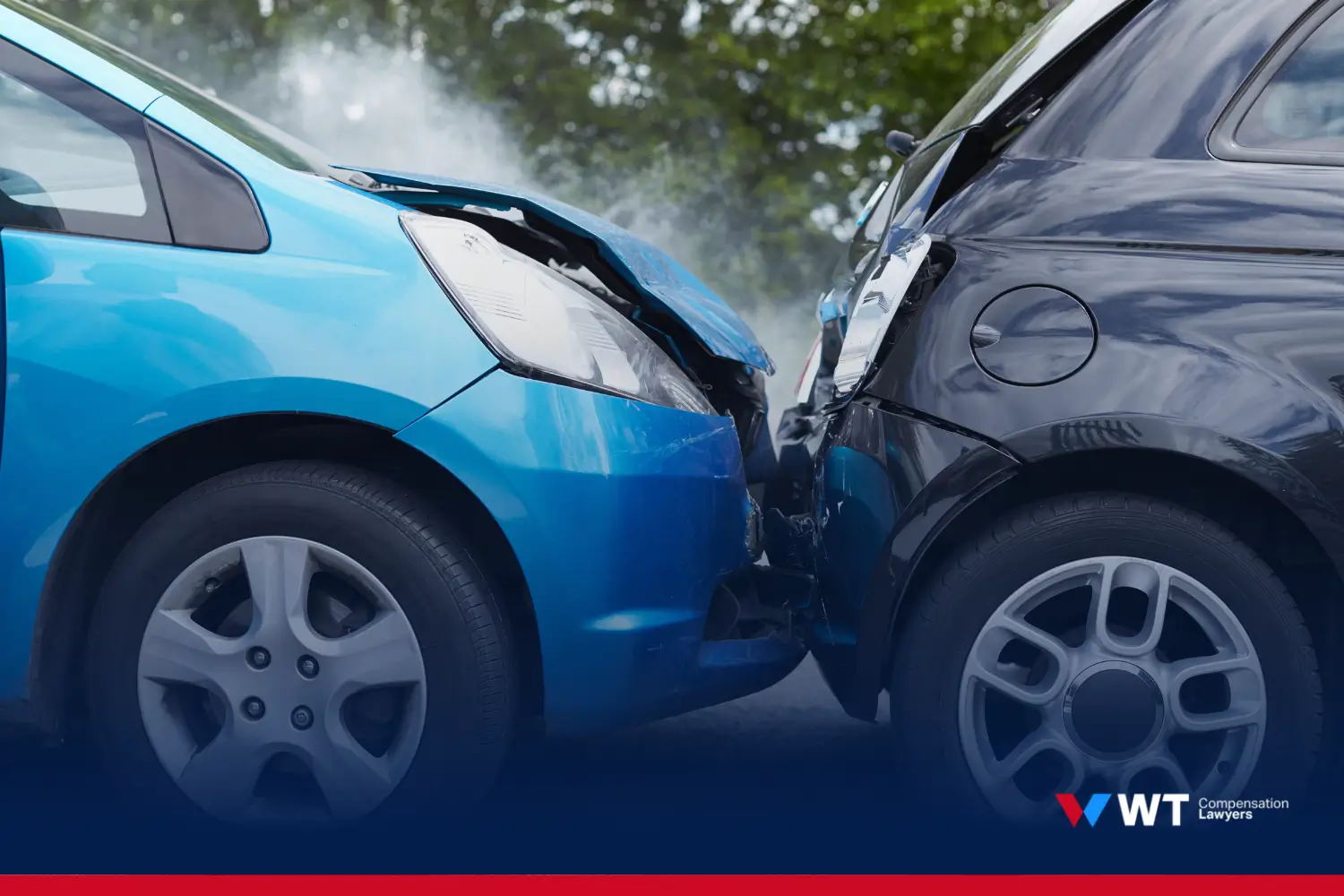
If you don’t have insurance, you will be personally liable to pay for the repair costs, towing fees, and any hire car expenses claimed by the other driver. If you fail to pay, the other driver or their insurer can take legal action to recover the money. Your compulsory third party (CTP) insurance only covers personal injuries, not damage to your car or property damage.
You could also receive fines or demerit points if you breached road rules. In serious cases, reckless driving may lead to license suspension or criminal charges.
If you dispute the costs, you can:
- Negotiate with the other party or get an independent repair quote.
- If no agreement is reached, the matter could go to court, and you may face legal fees.
When Is the Front Driver at Fault (or Shares Fault)?
Even though a rear-end collision usually places the driver behind at fault, the lead driver can also be held responsible if their actions caused the accident.
If the vehicle ahead creates an unavoidable hazard through sudden, negligent, or illegal behaviour, they may share fault or be fully liable for the rear-end collision accident. The lead driver takes or shares responsibility in these cases:
Sudden and Unreasonable Actions
The lead driver can be considered to be at fault if they make abrupt stops without a valid reason, such as slamming on the brakes in flowing traffic or engaging in brake-checking behaviour.
Stopping in prohibited locations, like intersections or active lanes, and failing to signal when changing lanes or turning can also make the front driver liable. Especially if these actions directly caused the accident and left the vehicle behind with no chance to avoid a collision.
Vehicle Equipment Failures
If the vehicle ahead has malfunctioning brake lights or broken hazard lights at the time of the rear-end car collision, the lead driver may be considered at fault.
Equipment defects like these reduce visibility and fail to warn trailing drivers, which can contribute to a rear-end crash. Fault may also be assigned if the driver was aware of the defect and failed to take reasonable steps to fix it before the motor vehicle accident.
Dangerous Driving Behaviours
If the lead driver makes aggressive lane changes or cuts you off without warning, they may be considered at fault because their actions leave you no safe way to avoid a rear-end collision.
Road rage incidents, where the driver in front deliberately obstructs or harasses other vehicles, can also shift liability if their behaviour directly caused the accident. Driving unusually slowly without any justified reason, especially in fast-moving traffic, creates an unpredictable hazard and may result in the lead driver sharing or bearing full fault.
Similarly, unsafe merging or reckless lane changes that disrupt traffic flow can place responsibility on the lead driver if their negligence made the collision unavoidable for the vehicle behind.
Reversing Situations
If the driver in front reverses into traffic without warning or rolls backwards, especially on hills or at intersections, they can be considered at fault because they breached their duty to move safely.
In parking lots, if a stationary car reverses into a moving vehicle, the lead driver may be fully responsible for the rear-end collision. Sudden, unnecessary braking, such as brake-checking with no traffic reason, also shifts fault to the driver in front if their actions left you no safe way to avoid the accident.
How is Fault Proven In Rear End Collisions?
Proving fault in a rear-end collision accident starts with the police report, which records traffic offences and sets the foundation of the case. Photographs of the scene of the accident and dashcam footage then illustrate how the collision unfolded, capturing driver behaviours and road conditions.
To strengthen your claim, witness statements can confirm illegal actions by the vehicle ahead, while mechanical reports may reveal defects that contributed to the crash. All of this evidence must align with specific traffic laws and statutes to prove liability.
Evidence used to prove fault in a rear end collision accident includes:
- Police Reports: These detail the circumstances, include citations (eg. for tailgating or reckless driving), and provide an official account that can support fault claims in a rear-end car collision.
- Photographs of the Scene of the Accident: Damage locations, skid marks, road conditions, and vehicle positions help reconstruct how the rear end collision occurred.
- Dashcam Footage: Video evidence can show driver behaviours, sudden stops, unsafe lane changes, or equipment failures by the vehicle ahead in real time.
- Witness Statements: Independent witnesses can corroborate what happened, especially regarding abrupt stops or unsafe manoeuvres by the driver in front.
- Mechanical Reports: Inspections can reveal vehicle defects like faulty brake lights that might have contributed to the rear end collision accident.
- Traffic Laws and Statutes: Demonstrating that a driver breached road rules (such as failing to maintain a safe following distance or improperly signaling) strengthens fault claims.
- Medical Records and Treatment Documentation: These support personal injury claims by showing the extent of injuries caused by the rear end collision accident.
- Insurance Policy Information: Reviewing the at-fault driver’s policy helps determine liability coverage and impacts how insurance companies assess and respond to your motor vehicle accident claim.
Can You Still Claim Compensation If You Were Partly at Fault?
Even if you’re partly responsible, you may be entitled to claim for personal injury, medical expenses, lost income, pain and suffering, and other damages. Australian law recognises contributory negligence, meaning your compensation may be reduced based on your share of fault.
For example, if you’re found 25% at-fault, your payout is reduced by that amount. You must still prove that another vehicle breached their duty of care and caused the accident.
State laws differ, so seeking advice from lawyers like WT Compensation Lawyers ensures you understand your rights and how to maximise your motor accident claims. Contact us if you’re unsure if you can make a claim or not.
Who’s at Fault In a Multi-Car Accident?
In a multi-vehicle rear end collision, fault often starts with the driver who rear-ends a stationary car, setting off a domino effect. If your vehicle is hit from behind and pushed into the car ahead, you may not be considered at fault.
Investigators and insurance companies analyse how the chain reaction unfolded by reviewing police reports, dashcam footage, and witness statements. Fault is then assigned based on each driver’s actions, and liability can be shared among multiple parties depending on their role in the accident.
What to Do If You’re In a Rear End Collision
If you’re involved in a rear end collision, your first priority is to check for injuries and move to a safe location.
After that, you’ll need to exchange information with the other driver, document the car accident scene, and report the incident to the police and your insurer. Keeping detailed records and seeking medical attention early will protect your legal rights if damage and injuries or disputes arise later.
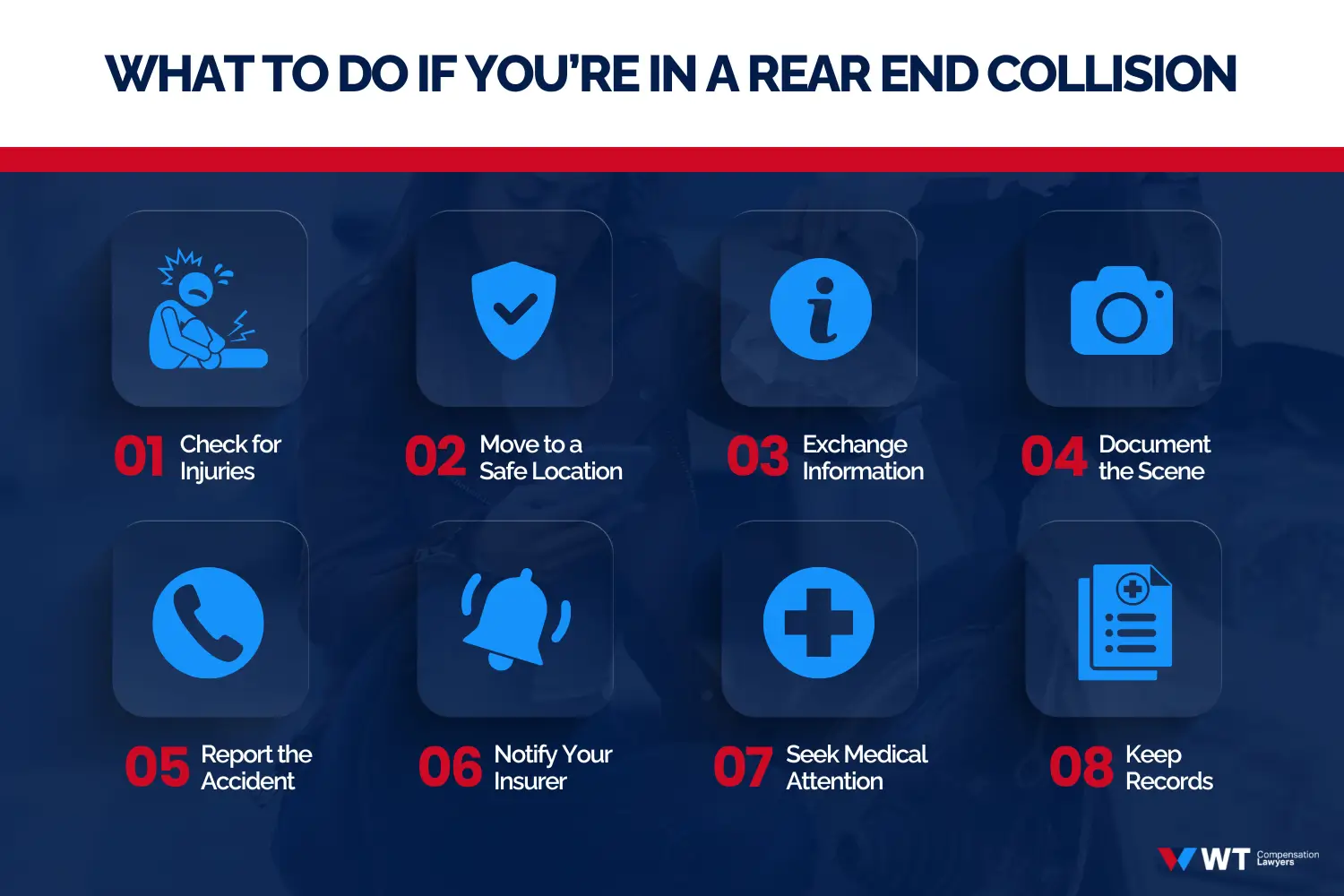
1. Check for Injuries
Immediately check yourself and passengers for serious injuries. Call 000 if anyone is hurt. It’s important for accident victims to receive urgent medical assistance, even if injuries seem minor at first.
2. Move to a Safe Location
If safe, move your vehicle to the roadside or a car park to prevent further damage and injuries. Maintain a safe distance from traffic and switch on your hazard lights to warn approaching vehicles and avoid a secondary car accident.
3. Exchange Information
Exchange names, contact details, vehicle registrations, and insurance information with the car in front or the car behind, depending on how the rear end collision occurred. If there are witnesses, collect their contact details to assist with any injury claims of other parties.
4. Document the Scene
Take clear photos showing vehicle damage, the scene of the accident, road conditions, and traffic signs. Secure any dashcam footage that captures the car from behind impacting your vehicle. This evidence will support fault assessment and insurance claims.
5. Report the Accident
Notify the police if the accident occurs with injuries, serious vehicle damage, or if fault is disputed. Request a copy of the police report. If the other driver denies liability, a motor vehicle accident lawyer can advise you on the next steps.
6. Notify Your Insurer
Contact your insurance provider promptly, providing them with all collected evidence about the rear end collision. Early reporting helps avoid delays in assessing damage and injuries and processing your claim.
7. Seek Medical Attention
Visit a doctor as soon as possible, even if you feel fine. Injuries from a car accident where you’re hit by a car from behind may not be immediately noticeable. Early medical reports are essential for injury claims.
8. Keep Records
Keep organised records of medical bills, repair quotes, and correspondence with insurers. This documentation is critical for claiming compensation for injury claims of other parties and recovering costs related to the rear end collision.
What NOT to Do After a Rear End Collision
After a rear end collision, you must not leave the scene, admit fault, accept blame, or sign any documents except the police report.
These actions can seriously weaken your legal position and may limit your ability to claim compensation for damage and injuries. To protect your rights and strengthen your motor vehicle accident claim, it’s important to avoid these mistakes from the outset.
- Leaving the scene of the accident before police authorise it can result in legal penalties and may void your motor vehicle accident claim. Stay at the rear end collision site until directed otherwise.
- Avoid accepting blame when the accident occurs, even if pressured by other parties. Fault assessments depend on official investigations and road rule breaches, not assumptions made at the scene of the accident.
- Sign only the official police report at the scene of the accident. Do not sign documents from another driver, their insurer, or any other party without advice from a motor vehicle accident lawyer, like WT Compensation Lawyers.
Steps to Protect Your Legal Rights After a Rear End Collision
Accidents can be complex and if you’ve been injured in a rear end collision, it’s important to get legal advice early. At WT Compensation Lawyers, we help you understand your rights and guide you through the claims process to ensure you receive fair treatment.
Our team assists with gathering evidence, managing paperwork, and handling discussions with insurance companies, so you can focus on your recovery while we manage the legal details. Get in touch as early as possible after your accident.
Our Approach to Handling Your Car Accident Claim
Our team has extensive experience handling car accident and motor vehicle accident claims, always with a strong focus on client care.
We provide clear advice, keep you informed at every stage, and ensure you understand how legal fees work upfront. WT Compensation Lawyers offers a No Win, No Fee arrangement, meaning you only pay legal costs if your claim is successful.
How We Help You Start Your Claim
Starting your claim involves collecting medical reports, accident evidence, and meeting strict submission deadlines.
We manage this entire process for you, giving you the best chance to recover compensation for damage and injuries, medical costs, and any injury claims of other parties. Our goal is to make the process clear, straightforward, and fully supported from start to finish.
Rear End Collision FAQs
In a car park rear-end collision where both vehicles are reversing, fault is determined by examining the actions of each driver. Unlike a rear end collision accident on the road, where the car from behind is usually considered at fault, a car park incident involving two reversing vehicles often results in shared responsibility for the accident.
Both drivers have a duty to reverse safely and maintain awareness to prevent a collision. If neither driver checked their surroundings or reversed without caution, both may be found partly at fault. Determining who’s at fault relies on evidence like witness statements, dashcam footage, and the physical circumstances of the accident. In practice, liability is often divided when two vehicles reverse into each other in a confined car park space.
Compulsory Third Party (CTP) insurance covers personal injury claims from a rear end collision, no matter who’s at fault. If you’re considered at fault, your CTP will pay for injuries to the car in front and other accident victims.
Damage to vehicles is covered by comprehensive insurance if you have it. Otherwise, you may need to claim against the driver at fault or pay for the damage and injuries out of pocket. When fault is shared, your compensation may be reduced to reflect your percentage of responsibility for the accident.
If the car behind is uninsured or it’s a hit-and-run accident, you may be eligible to claim through the Nominal Defendant Scheme.
You can claim several types of compensation after a rear end collision, especially in personal injury claims. These include medical expenses for treating serious injuries, both past and future, reimbursement for lost income and reduced earning capacity, and payments for pain and suffering caused by physical and emotional distress.
You may also receive compensation for care and assistance costs, rehabilitation expenses, and damage and injuries to property, including vehicle repairs, personal items damaged in the car accident, hire car expenses during repairs, and towing and storage fees. These forms of compensation address both economic losses like medical bills, lost wages, and property repairs, as well as non-economic damages such as emotional hardship.
In New South Wales, you have a 3-year time limit to make a personal injury claim, although you must notify certain claims, like motor vehicle accidents, within 3 months. For workers’ compensation claims, you must apply within 6 months of your entitlement, with some exceptions allowing up to 3 years. There is also a hard cap of 12 years after the injury for any claims.
In Victoria, the Transport Accident Commission (TAC) offers no-fault benefits and does not impose a time limit for claiming TAC benefits. Queensland has a fault-based system with a 3-year limitation period for claims. Other states like Western Australia, South Australia, and Tasmania have their own regulatory bodies but follow similar timeframes for claims.
What our clients say
Contact us
WT Compensation Lawyers
Address: Riparian Plaza, Level 38/71 Eagle St, Brisbane City, QLD 4000
Phone: (07) 3924 9544
Email: info@wtlaw.com.au
Hours: Monday to Friday, 8:30 a.m. to 5:00 p.m.
Back to Top: Rear End Collision | Who is at Fault?